The first decision when filming a hotel room isn’t where to put the camera. It’s whether the lights are on. Natural light or the room’s own — that one call sets the whole mood of the shot, and it’s wrong more often than you’d think.
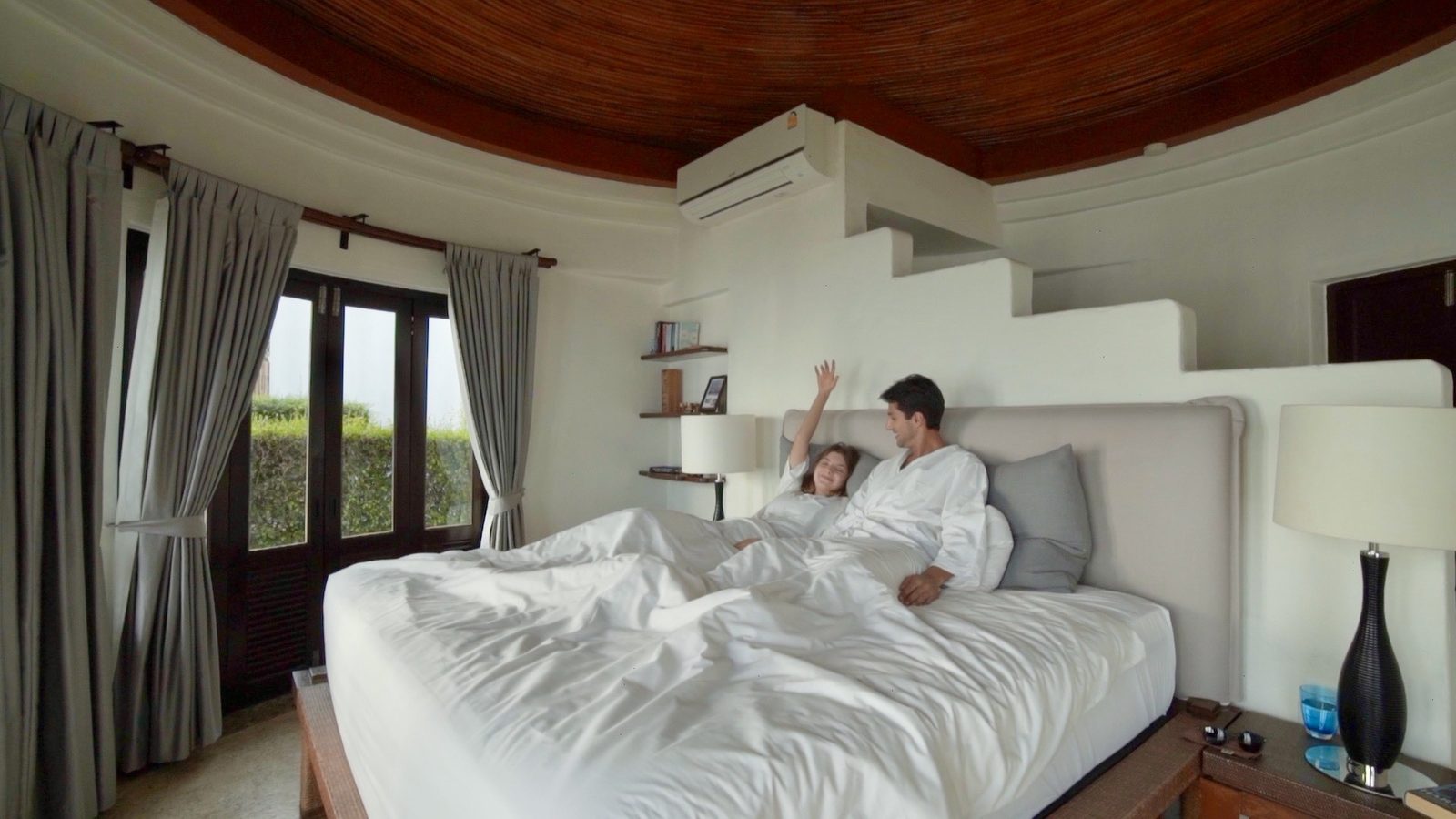
Light, with composition, is the thing that decides whether a space looks like itself or like a slightly sad version of itself. A room can read warm and alive or flat and clinical depending entirely on what’s switched on, and at what time of day.
The default: lights on
Most interiors film best with the room lights on. The lighting is part of the design — it fills dark corners, adds warmth, and creates the welcoming atmosphere the space was built to have. A lamp glowing on a side table does more for a room than another window of daylight. As a starting point, on beats off.
The exceptions
There are times to switch off — a room flooded with strong sun, where adding artificial light just muddies things, or a space where the daylight alone is doing something beautiful. The rule isn’t “always on,” it’s “on unless the room tells you otherwise.” Reading that is the job.
The window problem
The hardest shot in any room is the one toward a window with a view. The eye handles the difference between bright outside and dim inside effortlessly; a camera doesn’t. Balance them wrong and you either lose the view to white or lose the room to shadow. The honest fix is to let the exterior sit a touch brighter than the interior — that’s how the eye expects it, and it stops the view looking pasted on.
The designed spaces
Some rooms — a spa, a bar, a restaurant at night — were lit on purpose to feel a certain way. There, the interior lighting has to win, and daylight should be kept from fighting it. Any light a crew adds should be invisible: enough to shape the shot, never enough to flatten the mood the designers built.
And the magic hour for façades
For the outside of a building, the best results often come at dusk, not noon — the short window where the fading sky balances against the building’s own lights. Overhead midday sun flattens architecture; twilight gives it depth. It’s a small window, which is exactly why it gets scheduled first.
Reading light, space by space, is most of what separates a film that looks like the hotel from one that doesn’t. It’s built into how we plan a shoot.
You can see the result of reading light room by room in our film for Melati Beach Resort.